On February 2, the policy dialogue activity organized by the Ministry of Science and Technology of the People’s Republic of China on “Building a Competitive Open Innovation Ecosystem to Amplify the Momentum for Developing New Quality Productive Forces” was successfully held in Guangzhou. As the first official event under the 2026 APEC host country framework for sci-tech innovation cooperation and a key session of the 27th regular meeting of the APEC Policy Partnership on Science, Technology and Innovation (PPSTI), the event brought together representatives from government departments, businesses, and academia across APEC member economies, as well as guests from the APEC Secretariat and relevant international organizations. Zhou Chang, the researcher at the Latin America Research Institute of the China-LAC Technology Transfer Center, was invited to attend.
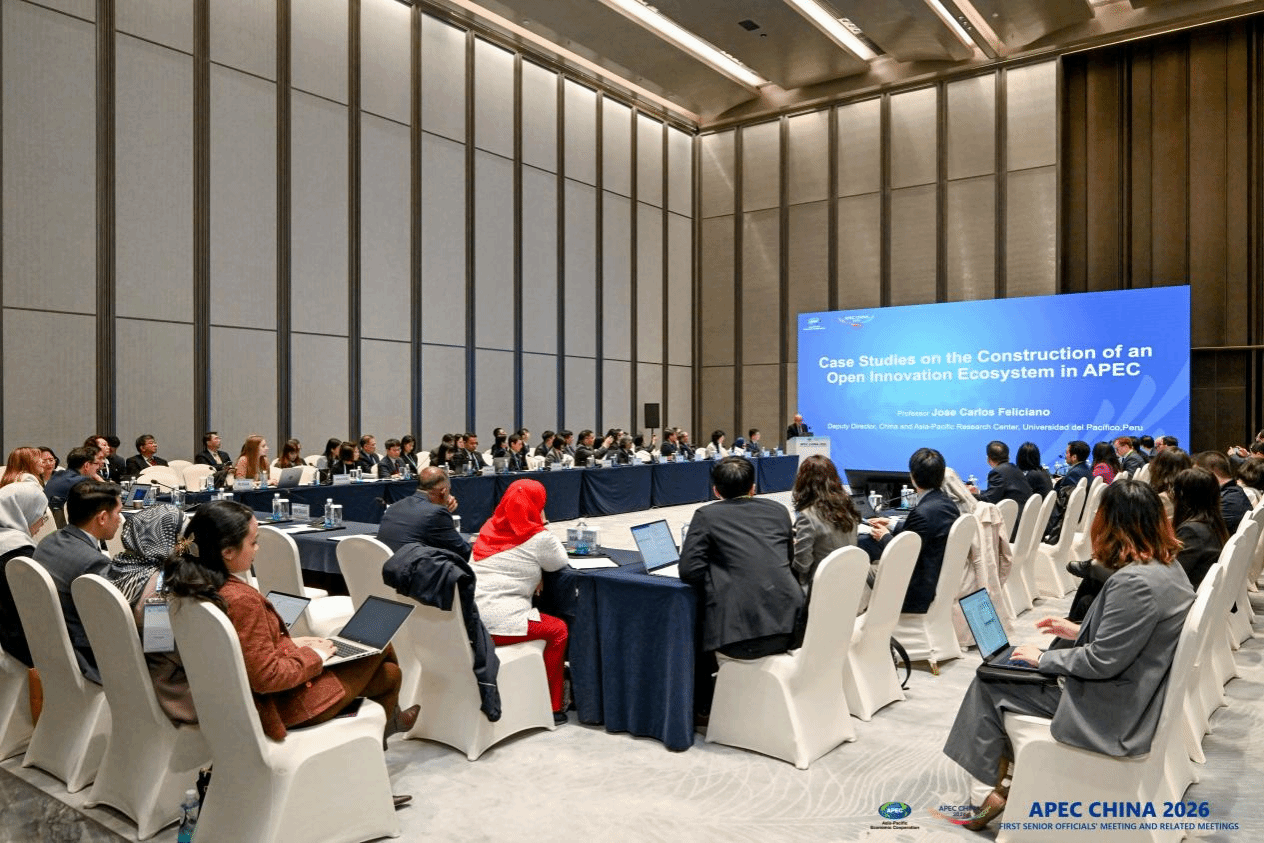
In her welcoming address, Wang Xiao, Deputy Director-General of the Department of International Cooperation at the Ministry of Science and Technology of China, systematically elaborated on China’s practices and vision in deepening international sci-tech innovation cooperation and building a comprehensive new pattern of openness. During the keynote speech session, experts and scholars from economies including China, Hong Kong, China and Peru shared their experiences in developing new quality productive forces and building open innovation hubs. In the roundtable discussion, participating experts conducted in-depth discussions on key measures, best practices, and policy support for building a competitive open innovation ecosystem. At the closing ceremony, Yang Xuemei, Vice Chair of the APEC PPSTI Host, stated that this dialogue had deepened the understanding of the synergistic relationship between an open innovation ecosystem and new quality productive forces, laid a solid foundation for cooperation in related fields under the APEC framework, and called on all parties to build consensus and jointly promote the development of an inclusive, competitive, and sustainable regional innovation landscape.
Next, the China-LAC Technology Transfer Center will take this participation as an opportunity to continue leveraging its bridging role as a national-level platform. With a more open approach, it will foster the efficient flow of innovation factors between both sides of the Pacific, contribute to building a resilient and inclusive regional innovation network, and let the achievements of sci-tech cooperation benefit the peoples of China and Latin America more broadly, and jointly create a prosperous future of win-win cooperation.