On the morning of May 13, Liu Jiyun, Dean of the School of Economics and Management at Dongguan University of Technology (DGUT), led a delegation of faculty members to visit the China-LAC Technology Transfer Center. The two sides engaged in in-depth cooperation exchanges on core topics including China-LAC think tank development, international talent cultivation, and joint development of digital education standards, further consolidating consensus and promoting coordinated development of science, technology, and people-to-people exchanges between China and Latin America.
During the meeting, Chen Baiman, Director of the China-LAC Technology Transfer Center, stated that the Center is committed to becoming a "bridgehead" for technology transfer and scientific cooperation between China and Latin America. Relying on a full-chain service loop integrating research, education, commerce, and law, as well as an overseas innovation cooperation network, the Center continues to deepen multi-field cooperation, providing solid support for the country's efforts to build a globally competitive open innovation ecosystem. The attending representatives agreed that both sides have a strong foundation for cooperation in strengthening China-LAC scientific and technological innovation and international talent exchanges, and expressed a desire to leverage their respective platform advantages and resources to establish a closer and more innovative cooperation model.
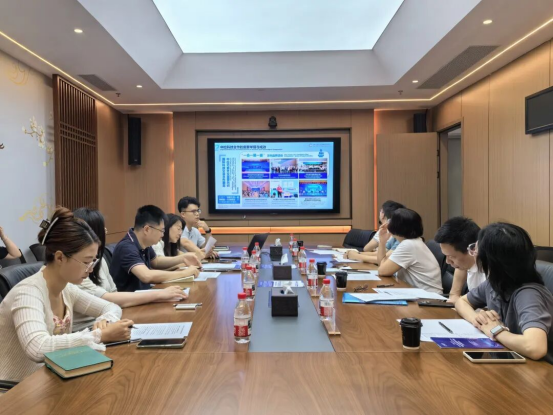
Following the discussions, the two sides reached multiple consensus points on cooperation. First, they will establish an efficient collaborative team, clearly define roles and responsibilities, and set up a regular communication mechanism to ensure effective implementation of cooperation. Second, they will strengthen China-LAC think tank development by jointly setting up academic research projects related to Latin America, supporting graduate student research and practice, and deepening collaboration on the solicitation of contributions for the Think Tank Report, thereby providing intellectual support for China-LAC cooperation. Third, they will jointly explore the development of digital education standards, formulate group standards for the China-LAC Digital Education University Alliance, and create standardized international courses that can be "exported". In addition, the two sides will explore further possibilities for cooperation in areas such as the training of bilateral technology brokers.
This exchange built a pragmatic bridge for cooperation between the two sides and serves as a vivid example of responding to China's national strategic deployment on scientific and technological cooperation with Latin America. In the future, both sides will deepen resource integration and complementary advantages, helping to solidify the foundation of China-LAC friendly cooperation through think tank development and talent cultivation, and injecting lasting momentum into the building of a China-LAC community with a shared future.