To effectively serve the broader interests of the nation’s diplomatic efforts, promote high-quality joint development of the Belt and Road Initiative, and deepen China-Latin America scientific, technological and economic relations, a delegation from the China- LAC Technology Transfer Center visited Argentina and Chile from 19 to 26 May. The delegation conducted research and exchanges with representatives from various sectors in Latin America on China-LAC in sci-tech, cultural exchanges and economic and trade relations, achieving significant substantive results. The delegation comprised six representatives, including Zheng Yu, Vice-Chancellor of Dongguan University of Technology; Li Yaoqiu, Grade 4 Researcher at the Dongguan Municipal Science and Technology Bureau; and Chen Baiman, Director of the China-LAC Technology Transfer Center.
In Focus: Huge Potential for Collaborative Innovation in Science and Education; Opening Up New Opportunities for International Research and Academic Exchange
The delegation visited the University of Buenos Aires (UBA) in Argentina, where both sides held discussions on areas such as China-Latin American scientific research cooperation, youth talent exchange, and inter-university visits by faculty and students, reaching a preliminary consensus on cooperation. The university expressed its active support for the second “Latin American Youth Innovation and Entrepreneurship Programme” (known as the “Youth Innovation Camp”), organised by the China-LAC Technology Transfer Center, to assist more young Latin American researchers in coming to China for scientific research cooperation, academic exchanges and industrial visits. The two sides will also promote the establishment of cooperative mechanisms between platforms such as the Argentina-China Research Center and the Latin American Institute of the China-LAC Technology Transfer Center. They will focus on joint research into topics including China-Argentina relations and sci-tech cooperation, whilst advancing the development of the journal “Contemporary China-Latin America Studies” to foster exchanges and cooperation among young scholars from both regions and facilitate the sharing of research outcomes.
Greater Effectiveness: China-Argentina Innovation Cooperation Centre Unveiled; “Bridgehead” Potential Fully Unleashed
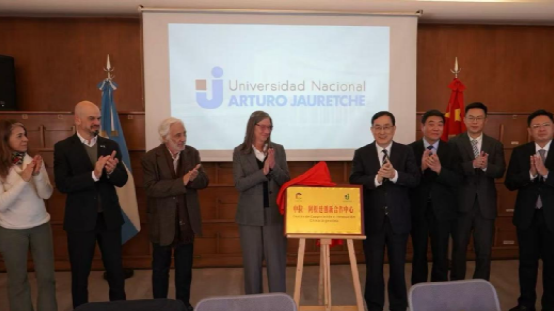
During the visit, in the presence of Wang Xi, Member of the Standing Committee of the Guangdong Provincial Party Committee and President of the Guangdong Overseas Friendship Association; Li Xudong, Deputy Director-General of the Guangdong Provincial Department of Science and Technology; Zhang Xiaowei, Science and Technology Counsellor at the Chinese Embassy in Argentina; Lorena Baum, Vice-Chancellor of the National University of Arturo Jauretche (UNAJ); Damián Paikin, Head of the Department of Strategic Planning and International Training of the Province of Buenos Aires, Argentina; and members of the delegation from the China-LAC Technology Transfer Center, the China-Argentina Innovation Cooperation Centre was officially inaugurated at UNAJ in Argentina. As the fifth overseas branch of the China-LAC Technology Transfer Center, the Center will further promote deeper cooperation between China and Argentina in fields such as smart manufacturing and digital education, facilitat retransformation of scientific and technological achievements between China-Latin America, and drive regional industrial upgrading. This marks a new phase of institutionalised development in bilateral sci-tech cooperation between China and Argentina.
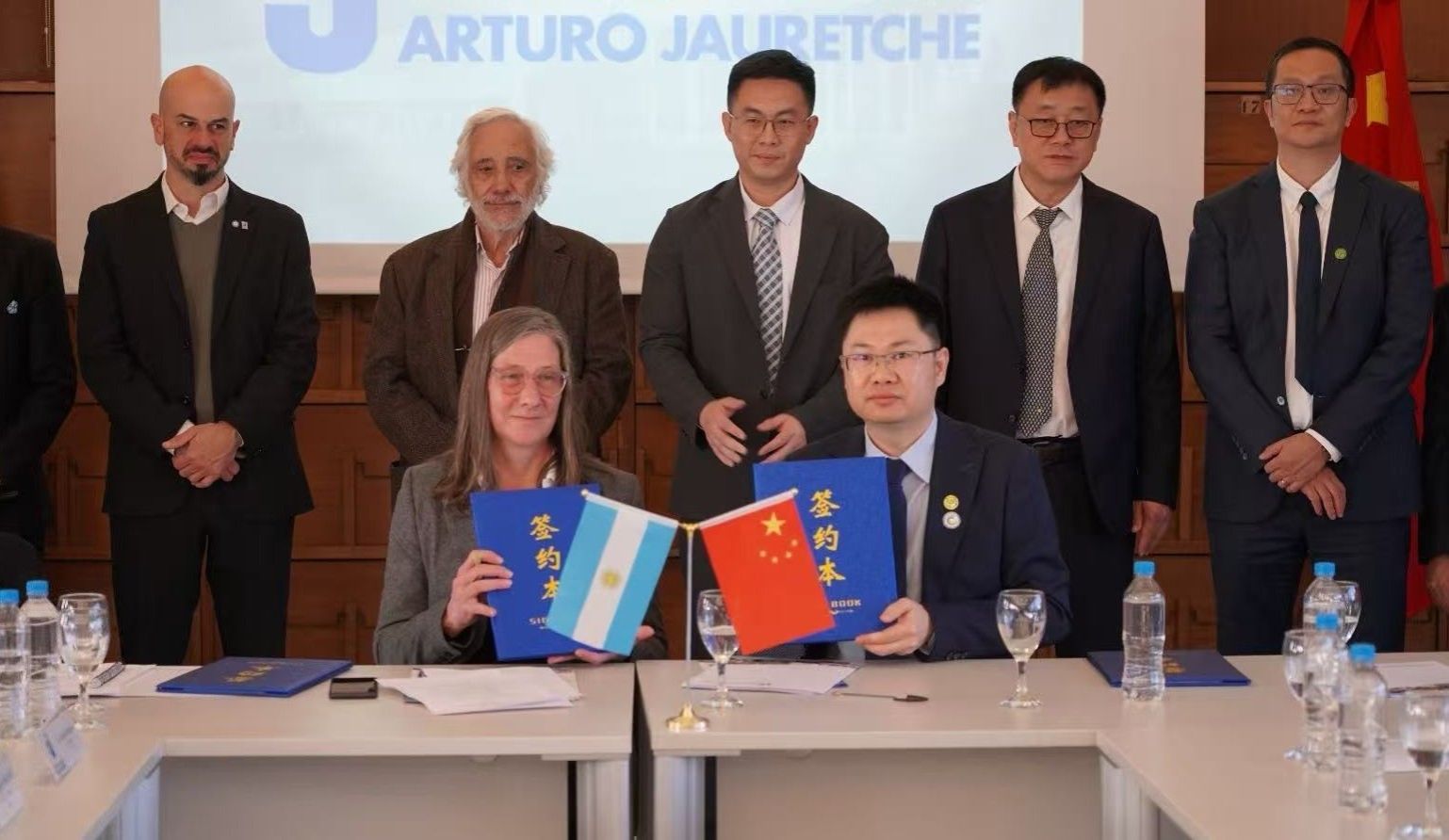
The China-LAC Technology Transfer Center also signed important documents with UNAJ, including a Memorandum of Understanding on the joint establishment of the China-Argentina Innovation Cooperation Center and an accession agreement to the China-Latin America Digital Education University Alliance, thereby consolidating the foundation for regularised cooperation between the two parties.
Stronger Foundations: In-depth Discussions Chart the Course Ahead and Outline a Blueprint for Sustainable Development
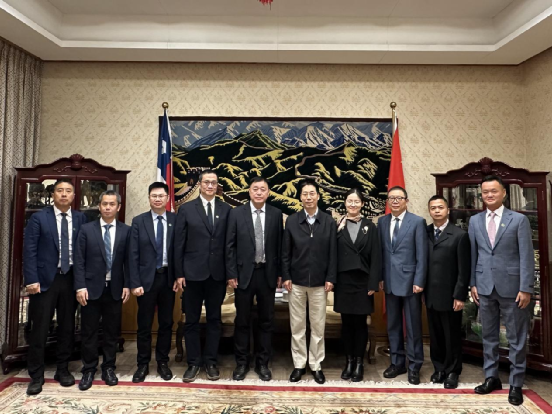
The delegation visited the Chinese Embassy in Chile to brief Ambassador Niu Qingbao on China-Chilean cooperation at the China-LAC Technology Transfer Center. Niu Qingbao commended the Center’s progress in establishing joint laboratories under the Belt and Road Initiative and building the China-Chile Innovation Cooperation Centre. He offered constructive guidance on establishing self-sustaining mechanisms for the Center and precisely aligning with Chilean cooperation needs, expressing hope that the Center would leverage its platform role to broaden the scope of bilateral cooperation and play a greater part in deepening and solidifying China-Chile scientific and technological collaboration to ensure tangible results.
Further Insights: Enhancing the Quality and Efficiency of Joint Laboratory Construction to Promote High-Quality “Belt and Road” Cooperation
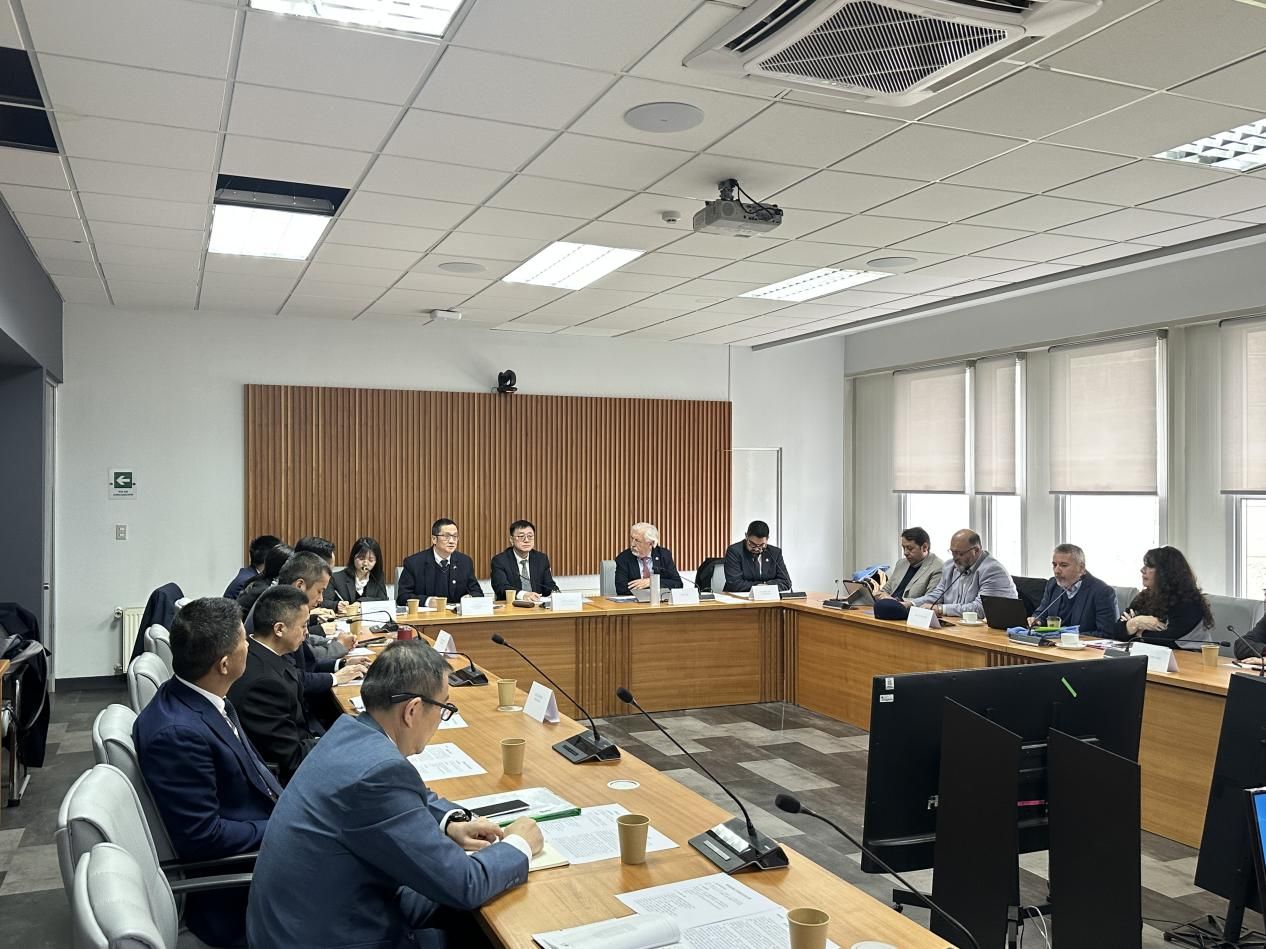
To thoroughly implement the Belt and Road Science and Technology Innovation Action Plan, the delegation visited the Universidad de La Frontera (UFRO) in Chile and held discussions with Rector Juan Manuel Fierro Bustos, Vice-Rector for Academic Affairs Eduardo Cisternas, and Rodrigo Garrido, Director of the Temuco City Education Bureau. Discussions centred on the joint establishment of the Belt and Road Joint Laboratory for Smart Disaster Prevention and Emergency Response in China-Latin American City Lifelines” and the deepening of inter-university cooperation between Dongguan University of Technology and UFRO, resulting in a series of substantive agreements. Both universities pledged to jointly provide funding, facilities and research personnel to support the laboratory’s development. Furthermore, all parties agreed to designate Temuco as the joint laboratory’s first pilot city for the application of relevant research outcomes, and reached cooperation intentions on cooperation in areas such as drone-based disaster prevention and relief technology, as well as life sciences and health. The China-LAC Technology Transfer Center also signed an accession agreement with UFRO to join the China-Latin America Digital Education University Alliance.
A Broader: Collaborative Ecosystem Continues to Take Shape, Painting a New Picture of China-Latin American Sci-Tech Innovation Cooperation
During the visit, the delegation also paid calls on institutions and organisations including the Embassy of the People’s Republic of China in the Argentine Republic, Chile’s Ministry of Science, Technology, Knowledge and Innovation, the Chilean Chinese Business Federation (EMPCH A.G.), and the Pontifical Catholic University of Chile (PUC Chile), promoting deeper integration of China-Latin America cooperation in science and technology, education, and the economy across multiple locations and dimensions.
This visit yielded fruitful results, including the unveiling of the fifth overseas branch of the China-LAC Technology Transfer Center, visits to nearly 10 Latin American institutions and organisations related to science, education and culture, further advancement of the joint development of the China-Latin America Belt and Road Joint Laboratory for Smart Disaster Prevention and the establishment of an application demonstration city in Temuco, Chile, as well as the implementation of plans for young scientists to visit Latin America and for Latin American youth to receive training in China. Three cooperation agreements were signed, pragmatically supporting China’s high-quality Belt and Road cooperation through talent exchanges, smart city development, and cooperation on science and technology innovation projects.